Executive TLDR
Success requires fighting daily for the life you want.
Master the fundamentals — don’t reinvent the system.
Constant improvement separates pros from amateurs.
Set weekly goals and hit them consistently.
Momentum matters — prepare before the new year starts.
Change bad habits and strengthen good ones.
Use the law of large numbers in short bursts.
Go wide early — build more first-generation leaders.
Securities licensing and skill mastery pay off long-term.
Massive override income is built through duplication.
Confidence grows from competence and repetition.
Success isn’t “if” — it’s “when,” based on effort.
Video Summary
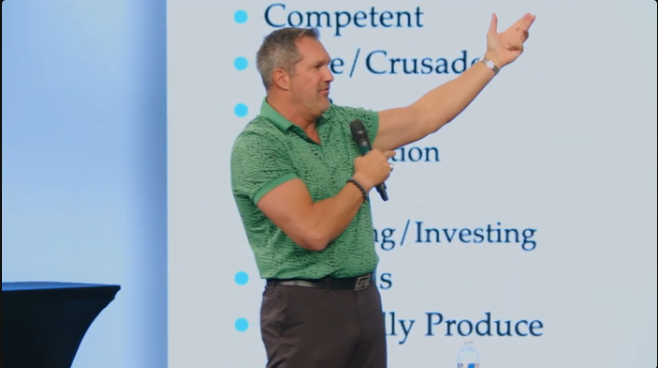
Tom Safford reflects on his 46-year journey in Primerica, starting at age 17 and building a legacy alongside his family. He explains that long-term success comes down to a simple decision: fight for the life you want. Over decades, he’s seen that the system works — but only for those willing to master their craft.
Using stories from a recent African safari, Tom draws parallels between survival in the wild and success in business. Just like animals must fight daily for survival, entrepreneurs must fight through fear, rejection, and self-doubt. Success is not guaranteed; it must be pursued aggressively.
Tom emphasizes five core principles using an acrostic framework:
F – Fundamentals:
Master the basics. Don’t innovate prematurely. Copy proven systems, presentations, and training structures. True mastery means knowing the material deeply enough to diagnose and correct mistakes instantly.
I – Improvement:
Commit to constant improvement. Success requires a “constant assault on continuous improvement.” Growth is daily, incremental, and intentional.
G – Goals:
Be a weekly goal setter and hitter. Momentum matters. Those who prepare early and plan ahead create exponential growth when the calendar turns.
H – Habits:
There are only good habits and bad habits. Success requires replacing weak habits with strong, disciplined ones. Clear mental vision drives habit transformation.
T – Time & Large Numbers:
Apply the law of large numbers in the shortest time possible. Massive recruiting and activity bursts create breakthroughs. Small effort over long periods produces mediocre results.
Tom shares personal struggles — going 0-for-70 on appointments and failing his securities exam seven times — before eventually building millions in securities income. His message is clear: failure is temporary if you keep fighting.
He also highlights one of his biggest regrets — not building wide enough early on. Even with dozens of first-generation RVPs, he believes he could have expanded further. The lesson: go wide, duplicate leaders, and build momentum aggressively.
Ultimately, Tom’s message is that financial freedom, travel, lifestyle upgrades, and override income are the byproducts of mastering fundamentals and refusing to quit. Success isn’t mysterious. It’s earned through discipline, duplication, and relentless activity.
FAQs
1. What is Tom Safford’s main message?
Fight for the life you want by mastering your craft and fundamentals.
2. What does “master the fundamentals” mean?
Copy proven systems and know them deeply enough to execute flawlessly.
3. Why is constant improvement critical?
Growth compounds over time and separates long-term winners from average performers.
4. What role do weekly goals play?
They create accountability, structure, and momentum.
5. What is the law of large numbers?
High-volume activity in a short period accelerates breakthroughs.
6. Why is momentum important?
Preparation before key periods (like January) determines future growth.
7. What habits must change for success?
Replace weak daily behaviors with disciplined, goal-oriented routines.
8. What mistake does Tom admit?
Not building wide enough early in his career.
9. Why is securities licensing important?
It builds long-term residual income and professional credibility.
10. How did Tom overcome early failure?
By persistence, repetition, and refusing to quit.
11. What does “go wide” mean?
Develop more first-generation leaders for broader organizational growth.
12. What builds override income?
Duplication, recruiting, and leadership development.
13. Is success guaranteed?
The system works — success depends on personal effort.
14. What separates professionals from amateurs?
Discipline, fundamentals mastery, and consistent activity.
15. How long does success take?
It’s not about “if” but “when” — determined by effort and volume.
Glossary
Fundamentals – Core presentations, systems, and processes that must be mastered for duplication.
Constant Improvement – Daily effort to enhance skills, mindset, and execution.
Law of Large Numbers – Generating massive activity quickly to accelerate results.
Momentum – Sustained forward motion created by consistent activity.
Override Income – Earnings generated from a team’s production.
Go Wide – Building multiple strong first-generation leaders.
Duplication – Teaching others to replicate your recruiting and selling methods.
Securities Income – Earnings from investment product sales and licensing.
Weekly Goals – Short-term targets that drive accountability and growth.
Mastery – Deep competence developed through repetition and correction.
Transcript:
You know, so you always wonder what, you know, like, what’s it going to be like when I get a team and I’m going to be able to have people show up and override people. You just need to come to this meeting, be at the front of this room on the stage and look out over everybody and say, this is just a quarter of what we override. All because my father, my brother, myself and my mother decided to do something with our lives. That’s it. Decided to take a stand, said, this is bad, this is better, and let’s go out and do something about it. So here I am, 46 years later, starting the business when I was 17, couldn’t get licensed in June of 1980, didn’t get licensed until August of 1980 when I turned 18. And here we are, 46 years later.
Well, in my 46 year, 45 years, in my 46th year, and I haven’t changed a damn bit, have I? See, you all weren’t around. You didn’t see me. So you had no idea how cute I was back then. But one of the things that’s so awesome to see is you hear people talk. And Hector did a fabulous job today. And dad always talked about something you used to talk about the threat of success in the fabric of life. And when you hear what Hector talked about at the RVP meeting and if you weren’t there means you weren’t an rvp. We’ll get to the next one. They’re not closed meetings, they’re open meetings. Get RVP and get there. But that threat of success, all the different things Hector talked about, I’m like, my gosh. Hector came into business 1984. Dad came into business 1980.
Company didn’t have any flip charts. Dad brought people the flip charts so they could master those techniques. The company didn’t have third party system. Dad brought the company third party system so people could grow their business. The company didn’t do op meetings. Dad brought them op meetings. And so they could do all these things. And all you have to do is master your craft. I’m going to talk about that in a little bit. But before that, at the end of the day, you got to fight for the life you want. I’m talking fight for the life you want. Last night, because we’re on this new thing called Follow Patty Schechter’s Life. This is what we do. So last year, Leila and I went to Greece and Patty gave us this whole itinerary. We had to Go to Greece.
And I didn’t know that I could spend that much money going to Greece, but it was, if Patty can do it, then I can maybe do it. So it was perfect. And so this year, we go to Africa, someplace we always wanted to go. And at the end of the day, it used to be a time in our lives where we said, well, we will never fly first class. We will never fly business class. That’s ridiculous to spend that much money in order to go someplace until you’re going to pop on a plane for 16 hours and go to Cape Town, South Africa. And then you say to yourself, well, economy’s 1300 and first class is seven, and business class is 7300. It’s just six or seven. Yeah, 73. It’s just $6,000 difference.
Well, Ron Weber told me the other day that he makes between 6,000 and $8,000 per client. Write one more app, fly first class. What do you want out of life? You’ve got to say so. You got to fight to make RVP and get great at your craft. And when you have a balanced business, doing the right things, one sale, first class. And when you fought and you’ve won, like many of the people sitting at the front rows, it’s not a matter of if you win here, folks. It’s a matter of when. And that time frame is just up to you, because the system is good. The system works. It really just depends on how much you’re willing to fight through it all. But anyway, in Cape Town, we saw real fight.
The fight that country went through to overcome the stupidity of apartheid and the fight Mandela went through for 47, 27 years in prison before he became president and ran that country. We saw in Kruger national park the daily fight animals go through to survive in the savannah. Whether you’re the predator or you’re the prey, every day is the fight for survival. And you’ve got to think about it that way. Now, I took these pictures. I took these Pictures with my iPhone 12. Just because you got money doesn’t mean you gotta spend money. These pictures are pretty good for an iPhone 12. Patty’s got one, too. I’m following Patty. And whether you’re a giraffe, you all know this is a female giraffe because it has hair on its horns. I know you knew that.
Just telling you, whether you’re the elephant, you’re the cape buffalo, whether you’re the jackal, every day, you’ve got to fight through the fear. Survival. Every day they have to fight. And you have to fight through the fear of talking to people. I could, I looked at that list Tom Force brought up of introverts and I’m like, that’s me. Best definition I heard from came from Lilo, which most of the great things come from lilo. So here’s what she said. Extrovert takes, gets their energy from people. Introverts have their energy zapped by people. I said, well, I’m an introvert, but in this business I got to be an extrovert. Why? Because there’s millions of reasons why it pays off. So when you look at this and that last picture is a pack of wild dogs.
They’re the cutest doggone things going, but with that impala that they are now surrounding that we’ve watched and followed that hunt until the dogs got that impala, took it down and within minutes that impala is gone. When that impala got up, it knew it was going to have to fight for the day. It just didn’t know it was going to be its last day. And so many in here aren’t willing to fight for that day. When you don’t know if it’s going to be your last day. The things you can learn from nature are no different than the things you can learn from anybody up here. And unless you’re willing to fight for what you want, it’s going to be a tough road. My job is not to sit here and motivate you.
My job is to sit here and say, this is the place for you if you decide to do something different with your life. So good day for dogs, bad day for impala. Again, pictures I took on my iPhone. Pretty doggone good for my iPhone 12. What could I have done with a 17? Who knows? When we go to Egypt in February, I’ll have a 17. I’m going to upgrade my life. Things went good enough on this trip where I can do it. So on the left you see a leopard, middle female lion, top of saddle billed stork, and on the bottom right, just a little baby. Just a one year old leopard who took down another impala.
The impalas have a tough life over there, but that impala was kind of like us when we started out where the life insurance industry just came at us hard and they didn’t want us to survive at all. It’s a good thing we had people like Dennis and Patty understanding, getting good at their craft in order to fight those injustices. So just as this female leopard is fighting to get this impala up the tree. Because she knows if she can’t get it up the tree in a certain period of time, the hyenas, it doesn’t matter how many miles away those hyenas are. They smell that scent from miles away, and they’re going to come take that impala from that leopard. Life will take away from you unless you’re going to fight for it.
She tried to get that up the tree, and she could never get it up the tree. Why? She picked the wrong tree. We’re sitting in our Jeep. I don’t know jack shit about the savannah. I’m in my Jeep. I’m like, she picked the wrong tree. That’s the wrong tree. She can’t go up that tree. And the guide’s like, yeah, she needs to be over in that tree. But she had to learn, much like you guys have to learn and get better at your craft. This is coming from somebody like her who failed to get the impala up the tree. I owe for 70 on my first 70 appointments. You can’t get worse than Tom Safford did. Oh, for 70 if you do. If someone is worse than me, I’d love to meet them. Seven times before I got my securities license.
You gotta fight for what you want, fight for the good things. Last year, the company paid us 2.6 million alone in securities. Good thing I fought to get that securities license. You gotta decide what it is you want. It was just beautiful over there. But while I was over there looking at these great things we saw on the right. I won’t get into it. I might show Keith the video later. But those two lions were actually mating. We got that all on video. Didn’t know I was into lion porn, but there it was. Saw it right there. Yeah, exactly. All three seconds. I felt like the king of the jungle. And I saw that. Yeah, I beat that lion. But what I also saw is I saw. I thought about Keith fighting to never live in a garage again.
I thought about everybody who fights to stay financially fit. Leila said, growing old is a privilege and growing old financially fit is a choice. We had that great trip. Awesome. While were away for those 22, 23 days, the company sent us 327 checks for 317,000 bucks. All decides what you want to do with your light. Are you willing to fight? Let’s talk about fighting. Some people see this. My dad loved acrostics. Many of you say that. You’d look at that and you’d say, acronym. You’d be wrong, but you say acronym. Others Like Cardena would say, who cares? They both start with a but acronym Acrostic. Okay, that’s all right. But these can give you some great lessons. Acrostics really give you that word across where each of it will work itself out.
So let me show you the different things I want to talk about here. Let’s talk about the F. You heard about it today in the RVP meeting. For those of you who are not. If not, you saw it in spades with John Roberts, Ron and others, Tom and others. Today, you need to master the fundamentals. Easiest part of the business to do because all you have to do is copy. You don’t have to invent, you don’t have to come up with a new widget. You literally have to copy what’s already on pol or what the things that Jason does to record these events. All you have to do is copy. Say, pick one. Pick the same one your upline’s picked.
The reason you do the same when your upline is picked so that when you’re having trouble, your upline can say, tell me what you say at the cash value page and I’ll know exactly what’s supposed to be said. Found out that it wasn’t said and say, aha. You gotta master the fundamentals. One of the biggest fundamentals to master is your brain. What goes on between these 8 inches, because it makes all the difference in the world. So I really just think it’s these five things. Second thing is you need to have constant improvement. Constant improvement. That kind of goes along with the master, the fundamentals. Remember, when it says master, it doesn’t mean passable. It doesn’t mean be good at. It means master them. Improvement is what? Constantly getting in better, getting better.
One of our old CEOs, no longer with us, Joe Plumeri, coined the phrase khaki caci. Again, an acrostic acronym, depending how you do it. But acrostic meaning constant assault on continuous improvement. What are you doing? What’d you do today? I heard. I heard someone had six appointments this morning. Six or six? Six. I was like, six. I think I already had six meals today. Like six appointments. That’s awesome. So you got to decide whether you are ready to make a constant assault on continuous improvement. Andrew Carnegie said this. The greatest asset a person can possess in the world is the desire or thirst for knowledge and the willingness to earn it. Am I willing to do the things I need to do to get better? It’s not easy. I’m 32 pounds overweight. Getting that weight off not easy, but little.
Day by day, not putting as much in my mouth, not grabbing stuff as I go by, I will get there. Constant assault on continuous improvement. Improvement. Get better today. G goals. You got to be a weekly goal setter and a weekly goal hitter. How many people. Be honest, be honest. Already have your goals set for 2026 and the game plan in place. Game plan in place for January 1st and beyond. Raise your hand. There’s like 12 people with their hands up. You guys are behind the eight ball already. See, this thing called momentum matters. And the things you’re doing now get you ready. Body at rest tends to stay at body at motion tends to stay in motion. So here we are in November, getting that momentum going so that when January hits, we hit the ground running. January 2026.
We’re already in a movement to make it happen there. H. You got to change your habits. There’s only two habits, just two. There’s good ones and there’s bad ones. There’s no in between ones. They’re either good ones or bad ones. You need to learn, first of all, if you don’t have many good habits and you know that you need some better habits in order to succeed to the level you want to, then you’re going to need to change those habits in order to have that clear, concise mental picture of what it is you want in your goal structure. See, Carnegie also said this. He said, all riches and all material things that anyone acquires through self effort begins in the form of a clear, concise mental picture of the thing one seeks.
Most people in here do not have a clear, concise mental picture of why you’re even in the chair. That’s got to happen this weekend right here in Lank City. It’s got to change on your way home. You got to be a different person going out than you were coming in. And you’re going to have to change some habits to do that. Accentuate the good ones. Play to your strengths. We all have them. One of my strengths is not prospecting people. Why? Because they see me in my resting bitch face and they don’t want anything to do with it. They’re like, well, that guy seems like he’s happy, but his face is saying, why do I got to talk to this dude? So you got to find other ways in order to communicate, in order to reach out.
T, you got to make sure that you use the law of large numbers in the shortest period of time to your strengths. Here’s how most people do it. They take the law of small numbers over a long period of time. Let me give you an example. When we got started, my dad said to me and my brother, he said, listen, here’s what we’re gonna do. We have a goal to recruit 4,096 people in the first year. You heard Ron Reber talk about two to the 12th power. 4,096. We get two who get 2 who get 2. End of the year we got 4,096 people. Would you say that’s a big goal or little goal? We thought it was a doable goal, honestly, so we got after it. Dad recruited 118 people the first month in the bay. Shot did 32,000 a premium.
Okay, first month. But we had this goal of something bigger. It was 7 to 10 RVPs in the first year. This was the goal. Make a million bucks in 1980 was the goal. The first year failed miserably. We only recruited 3,000 people in our 10th month. No, January through yes, our 10th month. We went from $31,000 Bay Shop to $458,000 Bay Shop. 10 months later. We had over 500 recruits that month as well. That’s the law of large numbers in a short period of time. The law of small numbers, long period of time is you getting one this month, applauding yourself, doing a John Lavin for the next six months before you recruit somebody else. We got to get the law of large numbers going in the shortest period of time. And the reason why you want to do that is you can’t imagine.
You know, we describe life. You hear from Hector, from Keith, from Patty, from many others of how good life can be until you get there, until you experience some of the things we get to experience. You’re like, man, if we knew it was going to be this good, we wouldn’t have taken so long. Our biggest mistake, Hector mentioned his this morning. I’ll mention ours. Our biggest mistake. We did not go wide enough. Did not go wide enough. And you’re talking to a family who had, at our peak had 61 first generation RVPs and we did not go wide enough. 24 of them are still alive today. Don’t get me wrong, my business has done pretty doggone well. But if you talk about constantly improving, constantly better willing to fight hard for your families, then this weekend is the time you make that decision.
Thank you.